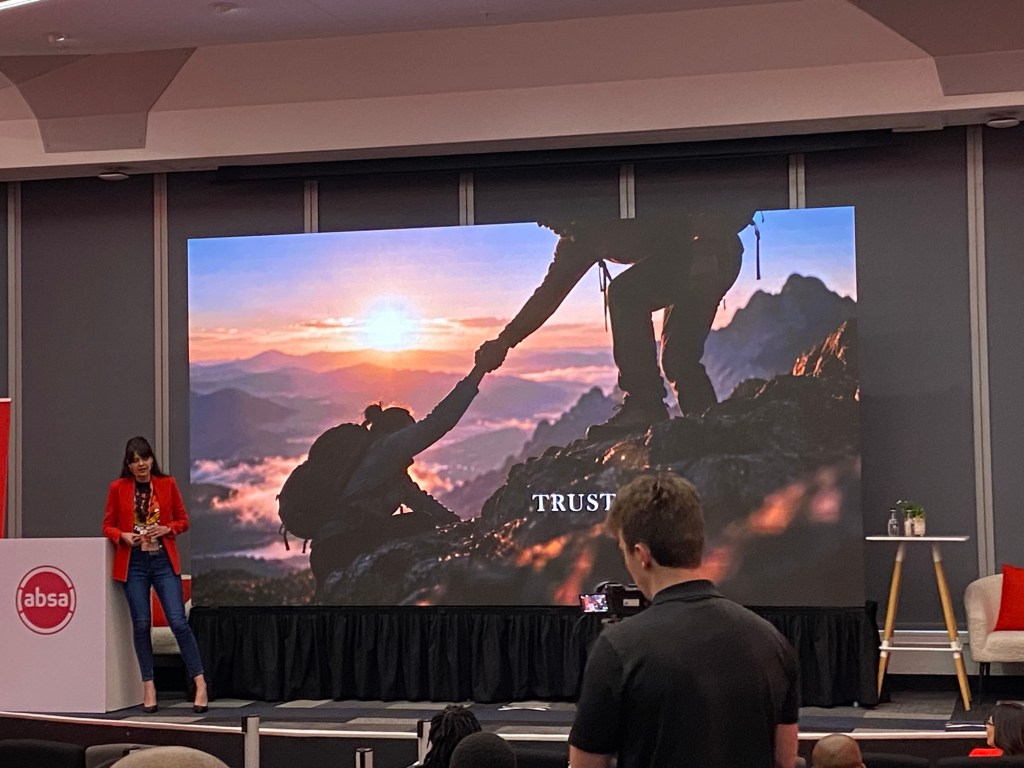
I was privileged to attend the Absa XDC 2026, the annual Design Collaboration hosted by the Absa Bank Digital Design team. Some of these wise words were shared by Nelri Venzke, one of the senior design directors. She was sharing about trust and its part in our relationship with customers. It brought me to a lightbulb moment, the same sentiments relate to leadership and our role as stewards and building trust with the people we lead and the responsibility placed on us by the organisations that employ us.
When an alarm clock fails to go off, we are disappointed. We relied on it to do something, and it did not. We may replace it, check the settings or set a second alarm.
When a leader fails us, the feeling can be more personal. We may feel betrayed. We entrusted that person with something that matters: our confidence, our professional reputation, our hopes for growth, or the truth about a situation that has left us vulnerable.
Reliance and trust overlap, but trust carries a deeper question:
Does what matters to me matter to you?
An employee who raises a concern is asking more than whether their manager will follow a procedure. They are asking whether speaking honestly will cost them their place in the team. An employee who admits a mistake is asking whether accountability will preserve their dignity. Someone navigating a restructure is asking whether decisions affecting their livelihood will be made fairly, and whether they will receive enough information to make decisions of their own.
Trust says something about the person extending it. It also asks something of the person receiving it.
What does being trusted require of a leader?
This is in my care

Stewardship offers a useful starting point:
“This isn’t mine, but for this moment it is in my care.”
A leadership role gives us authority over resources, decisions and opportunities. It places us in a position to influence people’s working lives. That authority comes with a responsibility to exercise care.
Employees’ careers belong to them. Their ideas, effort and aspirations are not possessions a leader acquires on appointment. Yet a leader can help those things flourish, leave them neglected, or actively damage them.
A steward understands the temporary nature of their authority and the lasting consequences of how they use it. They ask what they are preserving, what they are improving, and what condition they will leave behind for those who follow.
This changes the questions leaders ask themselves. Alongside “Did we deliver?” comes “What did delivery require of our people?” Alongside “Did we meet the target?” comes “Were our decisions fair, and could people challenge them safely?”
Results matter. So does the way we obtain them.
Employees trust systems, too
Trust does not always have a face.
Employees may trust an organisation’s recruitment process, its performance framework, its grievance procedure or its promise that opportunities are allocated fairly. Much of that trust rests in a system they cannot fully see. They do not know every conversation that informs a promotion, every influence behind a restructure, or every decision made after a complaint is submitted.
They judge the system through experience.
A concern receives a polite acknowledgement but no meaningful response. A development promise is repeatedly deferred. A performance standard changes after the work is completed. A person who speaks up finds themselves excluded from opportunities.
Each incident may have an explanation. Together, they can communicate a devastating message:
Your vulnerability is your problem.
The organisation may continue to describe itself as caring, inclusive and transparent. Employees learn what those words mean by watching what happens when someone needs them to be true.
Leaders therefore build trust through both personal conduct and the systems they shape. Policies, processes, incentives, decision rights and risk appetite make care tangible—or make it difficult to practise. A sympathetic manager has limited influence if the process offers no credible route to resolution. A well-written policy offers little reassurance if powerful people can disregard it without consequence.
Stewardship requires leaders to examine both.
Succeeding in our part, failing as a whole
Customer experience makes this responsibility especially visible.
Consider someone reporting fraud. They may have lost money, but they may also have lost their sense of safety. They need to understand what happened, what remains at risk, and what they can do next.
One team verifies identity. Another investigates the transaction. Another manages the complaint. Each may meet its own service standard. Yet the customer may still repeat their story, receive conflicting instructions and wait without clarity.
We can succeed locally and fail the customer collectively.
The same pattern appears in employee experience. A manager refers a concern to HR. HR directs the employee to a formal process. Another function assesses whether it falls within its mandate. Every team completes its assigned step, while the employee remains exposed, uncertain and responsible for navigating the gaps.
“Collaborate harder” is an inadequate response when the difficulty lies in conflicting incentives, fragmented ownership or a conflict of interest. Good intentions cannot resolve a process in which nobody has the authority or responsibility to address the whole problem.
A steward asks who owns the outcome, who can resolve the competing priorities, and how the person affected will know that progress is being made.
Start with what has been entrusted to us
The way we define a problem shapes the way we solve it.
“Close the fraud case” describes an organisational task. “Help the customer regain clarity, safety and a sense of control while we investigate” describes the human outcome the task should serve.
Similarly, “Process the employee’s complaint” describes an activity. “Establish the facts fairly, protect the employee from retaliation and provide a clear route to resolution” makes the responsibility more explicit.
Neither framing guarantees the outcome someone hopes for. An investigation may reach a difficult conclusion. A leader may have to decline a request or make an unwelcome decision. Stewardship requires fairness, honesty and care throughout that process.
Before acting, leaders should be able to articulate what the person has entrusted to them, where that person is vulnerable, and what a responsible outcome would look like.
For an employee, success may include being heard without humiliation, understanding how a decision was reached, knowing who is accountable for the next step, and having a credible way to challenge an error. Even when the answer is disappointing, the process can preserve dignity and agency.
Empathy, integrity and transparency in practice
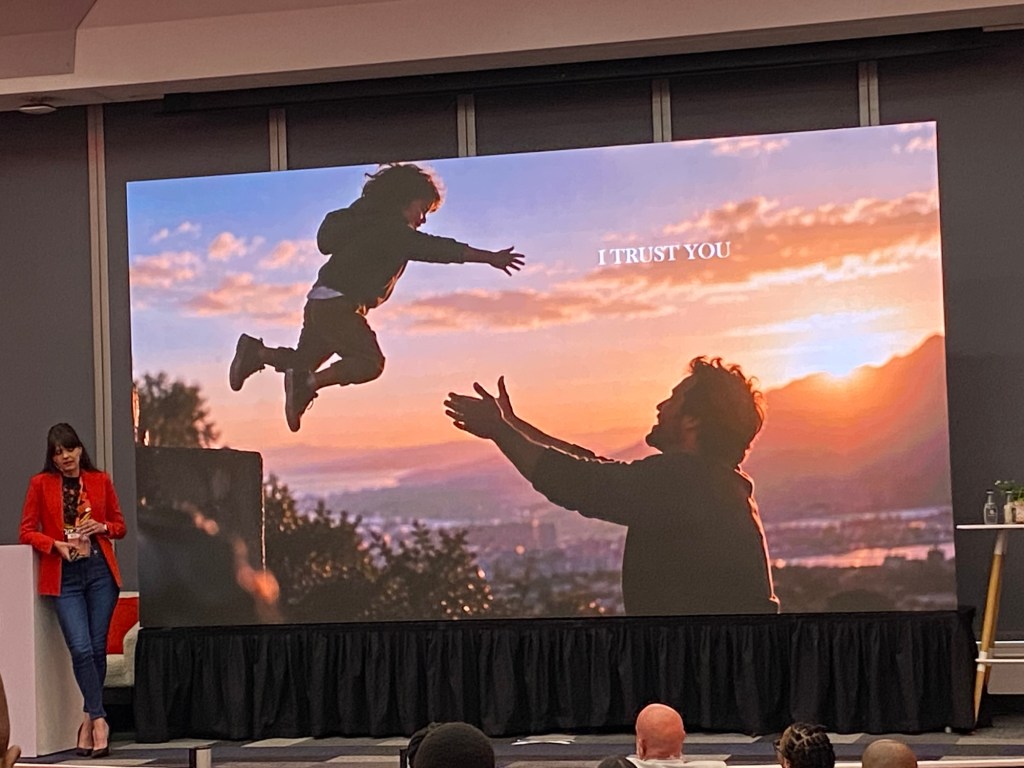
Empathy asks us to understand what is at stake for the person affected. It should influence the timing of a conversation, the support we provide and the care with which we communicate a decision.
Integrity requires consistency between our stated values and our choices. It means applying fair standards to influential people, acknowledging mistakes and honouring commitments when doing so becomes inconvenient.
Transparency gives people enough information to understand their situation. It includes explaining what is known, what remains uncertain, what can be shared and when they can expect an update. Where confidentiality limits disclosure, leaders can still explain the process and its boundaries.
These qualities become credible through repetition. Employees notice whether a leader gives credit fairly, keeps confidences, follows through and responds constructively to challenge. They also notice what happens after trust has been damaged.
Repair requires an acknowledgement of the failure, action to address its consequences and a change that reduces the likelihood of recurrence. Asking people to trust again creates a responsibility to give them evidence that doing so is reasonable.
Have we been worthy stewards?
Leadership places us in temporary custody of things with lasting value: people’s confidence, opportunities, dignity and belief that their contribution matters.
At the end of a project, a difficult decision or a period of leadership, we should ask whether we have been worthy stewards of what was entrusted to us. Did we leave people with greater clarity? Did we exercise authority fairly? Did we address the gaps in our systems? Did our behaviour make honesty safer?
The question “Do my employees trust me?” becomes more useful when followed by another:
“What do I owe them because they do?”
Their trust calls for responsible use of power, care for their vulnerability and accountability for the consequences of our decisions. Stewardship begins when we recognise those obligations—and make them visible in the way we lead.

