Philile Ntuli’s article in the Sunday Times this Women’s Month invites deep reflection on what it means to be a woman navigating patriarchal corporate and institutional spaces.
She makes an important distinction.
Patriarchy is not simply an environment dominated by men in positions of authority. It is a system that determines whose voices are trusted, whose anger is considered legitimate, whose leadership is celebrated — and whose dissent is punished.
And women, too, can become participants in perpetuating these systems when institutional conformity is rewarded more highly than transformation.
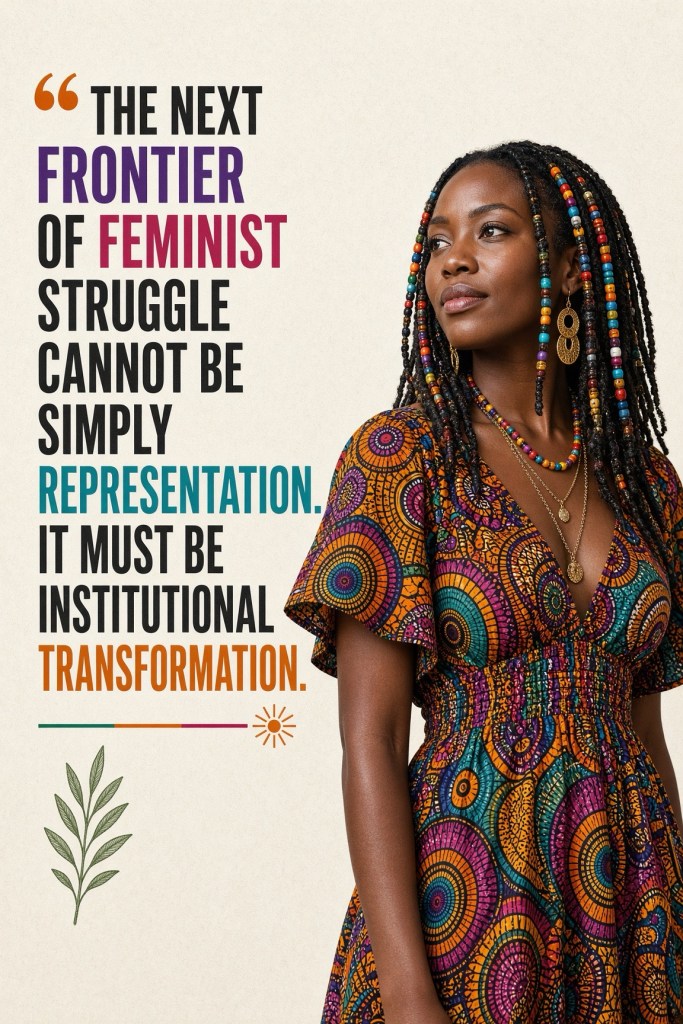
Representation matters. But representation without transformation is not enough.
Having a woman in a position of authority does not automatically create an environment in which other women can contribute, receive recognition for their work and thrive.
I have observed situations where women, once placed in positions of authority, resort to some of the same behaviours historically associated with patriarchal leadership cultures in order to protect their own positions: exclusion, bullying, harassment, gatekeeping and the undermining of other women.
For those on the receiving end, it can feel particularly traumatic when the person diminishing another woman’s dignity is herself a woman.
Recent testimony by Advocate Drushantha Ramsamy before the Madlanga Commission of Inquiry, concerning her experiences with her line manager Andrea Johnson, brings the complexity of women, power and institutional culture sharply into public conversation.
Ntuli makes an important observation: if we want to eradicate gender-based violence, we need to broaden our understanding of what violence can look like. It is not limited to physical harm. Institutional systems can also diminish women’s agency, credibility and dignity.
This raises a difficult question about the architecture of our workplaces.
What happens when patriarchal systems create only one or two seats for women at the table?
Scarcity can create competition rather than solidarity. Women may find themselves fighting to occupy — and retain — the few positions available instead of challenging the system that decided there should be so few seats in the first place.
The answer cannot simply be to teach women how to compete more effectively for scarce seats. We need to build a bigger table.
This Women’s Month, perhaps our reflection should go beyond celebrating the heroines whose historic march created an inflection point in South Africa’s struggle for liberation.
We can also ask ourselves:
How do I exercise power in the spaces I occupy?
Do I open doors behind me or quietly close them?
Do I amplify other women’s voices or perceive their brilliance as a threat?
Do I challenge systems that diminish women, even when those systems benefit me?
And am I helping create more seats at the table for the many competent and capable women coming behind and alongside me?
Representation gets women into the room. Transformation changes what happens once we get there.
This Women’s Month, let’s work towards both.

