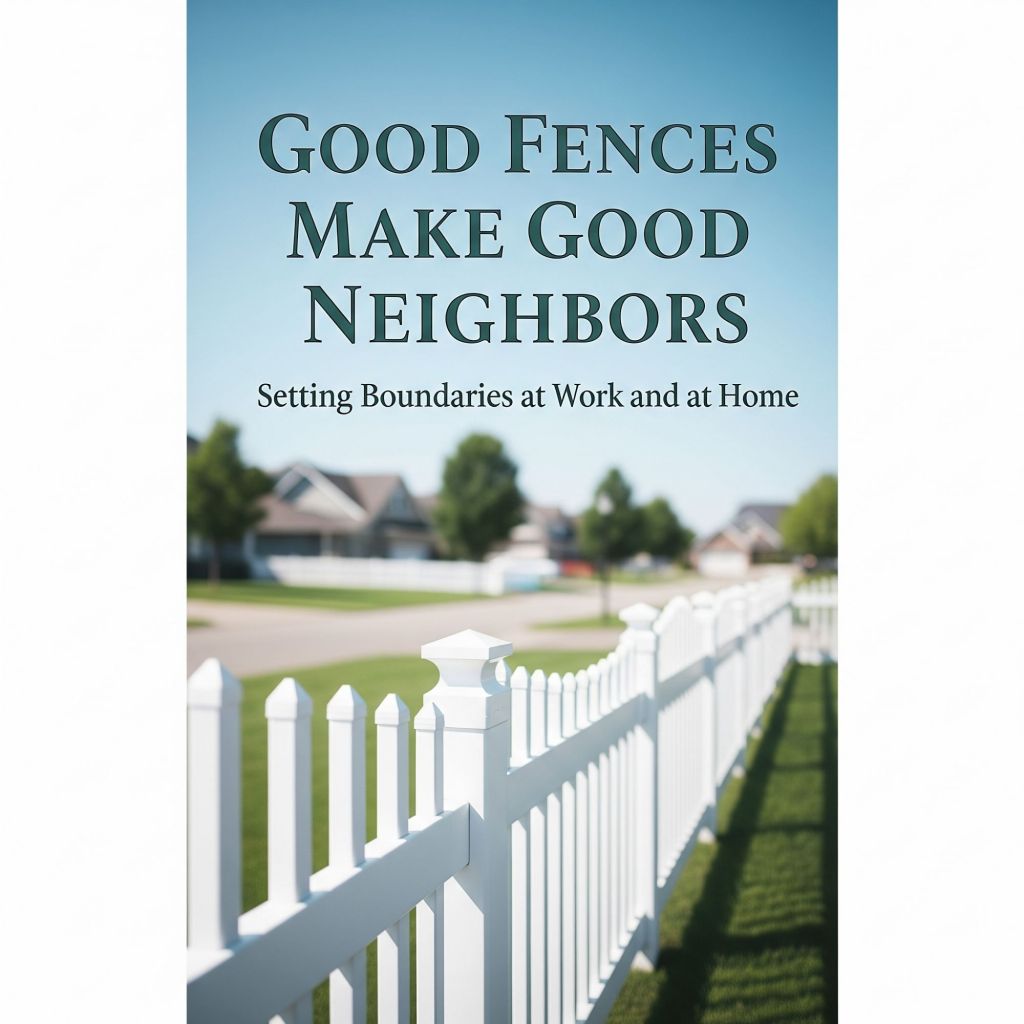
Robert Frost’s seemingly simple line, “Good fences make good neighbours,” resonates with a profound truth that extends far beyond property lines. It serves as a powerful metaphor for the critical importance of setting healthy boundaries, both within our personal lives and our professional environments. Establishing and maintaining these metaphorical fences is not about isolation, but rather about fostering respect, protecting our well-being, and cultivating authentic relationships.
At its core, setting boundaries is an act of self-respect and self-preservation. These limits define what we are comfortable with, what we have the capacity for, and what we will and will not tolerate. By clearly delineating these boundaries, we actively protect our most valuable resources: our time, our energy, and our inner peace. Without these safeguards, we become vulnerable to overextension, emotional depletion, and ultimately, resentment.
Furthermore, boundaries serve as crucial communication tools. They teach people how to treat us. When we articulate our limits and consistently uphold them, we provide a clear framework for interaction. Others understand our needs and expectations, fostering a sense of mutual respect and predictability in our relationships. Conversely, a lack of clear boundaries, or the failure to enforce them when crossed, sends a confusing message. It can inadvertently signal that our needs are less important, inviting others to overstep and potentially exploit our goodwill.
The consequences of porous or non-existent boundaries are significant. When we consistently fail to protect our time and energy, or when we allow people to repeatedly cross our lines without consequences, we inevitably experience a build-up of negative emotions. Anger and resentment fester, eroding the foundation of our relationships and impacting our overall well-being. Moreover, when we feel constantly taken advantage of or overwhelmed, it becomes increasingly difficult to show up honestly or authentically in our interactions. We may become guarded, withdrawn, or even passive-aggressive, further damaging the very connections we seek.
The tendency towards people-pleasing often underlies the struggle with setting boundaries. While seemingly altruistic, chronic people-pleasing is frequently rooted in past experiences, often a trauma response learnt in childhood. As adults, this ingrained pattern leads us to prioritize the needs and desires of others above our own, fearing conflict or rejection. By constantly seeking external validation and approval, we neglect to establish and enforce boundaries, leaving ourselves vulnerable. This lack of self-protection opens us up to being abused – whether intentionally or unintentionally – by partners, colleagues, leaders, friends, and even family members. Our inherent desire to please can be misinterpreted as a license to take advantage.
In conclusion, the principle of “good fences make good neighbours” is not a suggestion, but a fundamental requirement for healthy and sustainable relationships in all facets of life. Setting firm yet respectful boundaries is not selfish; it is a necessary act of self-care that ultimately benefits everyone involved. By protecting our time, energy, and peace, we create a foundation for authentic connection, mutual respect, and a more harmonious existence, both within the walls of our homes and in the broader landscape of our professional and personal lives. Embracing the wisdom of the good fence allows us to cultivate relationships built on respect, clarity, and a genuine appreciation for the well-being of ourselves and others.
 The Corporate Humanitarian