By Nomathemba Pearl Dzinotyiwei
Great leaders Do 3 Things that Drug Addicts Do. Wait, what?
That is the provocative title of Michael Brody-Waite’s TED talk. One wonders what on earth would a Chief Executive Officer have in common with a drug addict. He introduces himself as an addict. He also happens to be a CEO. In this compelling talk, he charts his journey from being a homeless drug addict to getting clean, getting a job, being promoted 8 times in 8 years in a corporate entity, then building a multi-million dollar company. He learnt these three principles at the weekly meetings where addicts share their stories and struggles and receive support to stay clean.
1. Be Authentic
2. Surrender the outcome
3. Be willing to do the uncomfortable work
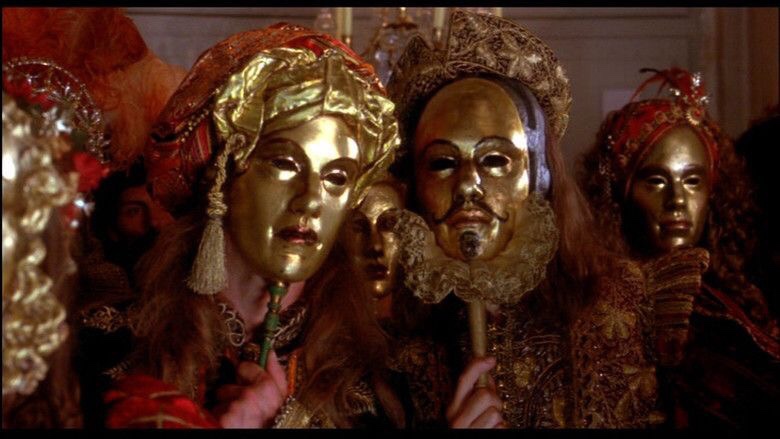
He talks about how he wore a mask, going to meetings for months but not sharing his real struggles, until one day, he dropped the mask and shared genuinely about his pain and struggle. That was his breakthrough. The root of any addiction is pain, and until you open up and heal that pain, the choice to drink alcohol or use drugs is an all too easy one. His compatriots understood and praised him for his first ‘genuine’ share. Recovering addicts have been there and see through the masks because they’ve worn them too and understand that they are a barrier to recovery.
THE CORPORATE MASKED BALL
He says these three principles are practiced by all addicts to keep themselves alive. They keep them from spiraling back into self-destructive relapses. He also used them along his journey through a corporate career to entrepreneurship & business success. However for many, these principles are the opposite of what one normally requires to succeed in a corporate setting. Career success for many is built on not being authentic, controlling people and events and getting others to do the dirty work.
Many of us wear masks in life, to hide the messy reality of our lives. Masked balls became popular in the 15th Century. According to Wikipedia: ‘A masquerade ball (or bal masqué) is an event in which the participants attend in costume wearing a mask.’ Interestingly, these events became popular with the titled, rich and famous because they could behave licentiously without fear of judgment and exposure. The events were often charged with sexual tension, however they provided a convenient disguise for intrigue and even murder.
At work, we dress up and wear the masks to blend in. Corporate environments are an endless masked ball. There is very little room for authenticity as people make the right moves to noticed, climb the ladder one step at a time and hopefully make it to the corner office. In a scene from the Man In The Iron Mask, the guests hold their mask with one hand, while dancing in a formal fashion with the other hand. There’s no room for spontaneity or free movement because one’s mask could slip and you could be identified. The same happens in corporate environments where what you wear, who you’re seen with and what you say to whom, is part of an elaborate mask to convince colleagues and superiors that you’re worthy of your position or a higher one.
We don the mask to ensure that we get what we want. By doing this we strive to control the outcome, because the results of being honest and authentic are unpredictable. We also adhere to the existing norms which prescribe who does what and when. However when you wear a mask, you can’t be seen and what you can see is limited. Many leaders don masks of invincibility. They avoid getting involved and understanding the details of what is done in their teams in order to appear to be strategic and in control.
The idea that a leader must be above the details of routine operational work is detrimental. Such leaders rely on their subordinates to filter the masses of available information down to sound bytes for their consumption. Some leaders don’t want to hear bad news. There is a popular saying: ‘Don’t tell me about problems, give me solutions.’ What they’re really saying is ‘I don’t have a cooking clue of what’s going on and I need you to tell me something that will give me comfort so that I can carry on as usual.’ The majority of these leaders are insecure with a fragile sense of self, that requires constant stroking of the ego to maintain the belief that that are powerful and in control. They believe their own hype and are easily intoxicated by the attention of manipulative colleagues. When the subordinates realise this, they too will play the game and will only only tell the leader what they think he or she wants to hear, because it advances their own interests at the expense of the business.
WHAT SANK THE TITANIC
Running a business based on sound bytes filtered through a management team of individuals with their own interests at heart has unintended consequences. Relying on the chain of command for information flow through an organisation means that the messaging is diluted in both directions. Firstly, leaders do not get to understand the seriousness of a problem in order to take the necessary decisions and action to solve it. Secondly, lower level employees do not get to fully understand the strategic intent of the organisation, commit to the vision whole-heartedly and do what is necessary to achieve it. Instead there is a constant interplay of powerful forces in the middle and senior levels of the organisation where the money moves are made, information flow is suppressed and critical activities are delayed. The iceberg principle applies, only 1/8th of the iceberg is visible above the water. That is the extent top leadership sees. The rest is what sank the Titanic.
SLOW DEATH AT THE MASKED BALL
The stilted dance and the holding of masks prevent leaders from being authentic. Being authentic is what gets people to genuinely trust us as leaders. Without trust, we create & perpetuate toxic work environments where people bully and backstab each other and colleagues are defensive and fearful. Such environments lack the necessary psychological safety for creativity and innovation. To allow innovation to flourish, the organisation needs to have a tolerance of risk. This means surrendering control. Success is not guaranteed but a measure of creative freedom and empowerment of employees is what a businesses needs to remain competitive.
Not doing the uncomfortable work, such as having honest conversations and understanding problems in detail can be fatal to a business. Allowing gatekeepers to reign supreme, as leaders stay above it all, derails critical action being taken because such action would threatens certain people’s career prospects. When this happens, the organisation will begin to stagnate and eventually decline. Such an organisation loses customers and market share, revenue and profitability decline, costs increase and it reaches a stage where the business is unable to perform its functions.
However to be authentic and surrender control requires self-awareness, a willingness to be vulnerable, courage and a willingness to take risks. Doing uncomfortable work requires humility and a sense of responsibility. To do this you have to drop the mask of invincibility.
A RETURN TO AUTHENTICITY
Truly great leaders are authentic. They create meaningful relationships and encourage ethical behaviour. They communicate their vision clearly and surrender the outcome to allow their people to give of their best. They also do the uncomfortable work of having difficult conversations and confronting problems because they understand, like a drug addict that that they need to it in order for the organisation to survive. In doing so, they become exemplary, gain the trust of their stakeholders and set their people and organisations up for success.
 The Corporate Humanitarian