By Nomathemba Pearl Dzinotyiwei
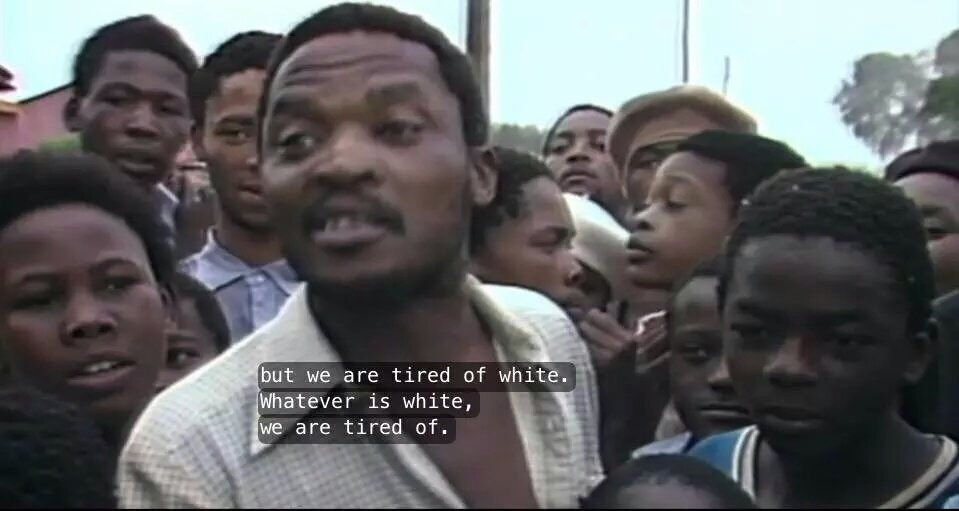 Meme courtesy of Twitter
#WorkingWhileBlack is a conversation between black professionals led by Sihle Bolani, author of ‘We Are The Ones We Need’. The first discussion titled: ‘What’s The Hardest Thing About Being Black in Corporate’ was an outpouring of emotional accounts by black professionals of their struggles in the workplace. The issues range from bullying and intimidation; being talked down to, belittled or ignored, not being given sufficient resources to accomplish tasks; having to cover up for or clean up after incompetent (often white) colleagues or managers and disparities in pay for similar work. Black professionals are often advised to put up with it for the sake of their careers, but many suffer from job-related stress and succumb to burnout and emotional breakdowns of varying magnitudes. Some resign without having a job lined up because they just can’t tolerate the abuse anymore.
WELL I’M NOT LIKE THAT.
White people, especially those in management will be puzzled or even offended by these views, because as far as they are concerned, they are not racist. Well, not outwardly or even intentionally. In reality, however, a significant number of them suffer from unconscious bias and therefore cannot recognise prejudice in themselves. Racism like any other prejudice, is not so much about reading the dictionary definition, then smugly concluding: ‘Well I’m not like that’. It is more about how black people feel about the discriminatory practices and micro-aggressions that they experience, which will probably never be experienced by white people. As Maya Angelou put it ‘People may forget what you said, they may forget what you did but they will never forget how you made them feel.’ Leadership needs to facilitate honest conversations for white employees to understand the impact of their actions on their black colleagues.
PUT THE FISH ON THE TABLE
These are not a pleasant or comfortable conversations, but they are essential. As one CEO, Teddy Daka said in a conversation with Dudu Msomi: “You need to put the fish on the table, clean it, then you can have a good meal” Keeping the fish under the table means eventually having to deal with the odor of a rotting fish that must be thrown out altogether because it can’t be salvaged.
White people have been socialized to see themselves as superior to other people in the world and deserving of privilege. For many, black people exist to serve them, as objects for their comfort and pleasure. They have many justifications from pseudo-scientific race theories to religion to support this belief. To be fair, many grow up being served by black people and believe that this is the natural order of things.
Black people on the other hand suffer from unending assaults on their individual and collective humanity by white people in a system that constantly reminds them of and reinforces their inferior status. They are angry, in pain and always have to fight for basic human rights. White people are dismissive of this constant collective trauma and will often ask why black people have to be so dramatic, and why they just don’t get over it. Given the two polar opposites it’s not difficult to understand why race relations remain tense in all spheres of life in post-Apartheid South Africa.
This discussion is not for the faint-hearted. To effectively confront prejudice, one must be prepared to confront the resistance from the egos of those who hold it. People’s self esteem is rooted in how they see themselves, perhaps as good, competent, fair etc. Anything that challenges that view will be met with resistance. Pointing out racism inevitably results in denial, defensiveness and passive-aggressive behaviour, all defence mechanisms driven by the ego or lower self which perceives such confrontation no matter how civil, as a threat. However we must persevere.
BLACK PAIN AND WHITE INDIFFERENCE. PROBLEM? NO PROBLEM?
What does the indifference of whites to the anger and pain of black employees mean for the future of business in South Africa? In my opinion, the core of the issue isn’t about race-bashing. It is a recognition that the overwhelming majority of black professionals in corporate entities feel excluded, unacknowledged, unappreciated and are therefore at various levels of disengagement. This phenomenon, unless it’s addressed spells doom for companies in South Africa. We need to acknowledge that institutionalised racism exists and is a barrier to our progress as a nation.
THE SOCIAL CONTEXT OF INSTITUTIONAL RACISM
Black South Africans have woken up from the pleasant dream of the rainbow nation. They are tearing off the plasters and bandages of reconciliation to reveal the festering wounds left by apartheid’s brutality on black people’s collective psyche. That wound is made worse by poverty and inequality and the failure to create a better life for all. The economic disenfranchisement of the black majority in contrast to the privilege of the white minority is reflected in the average incomes by race. It is evident in the skewed racial profile of senior and executive management in the private sector, which is not reflective of the general population. Giving better job opportunities and paying white people more than black people despite the latter having better qualifications or more experience is just the default position in business in South Africa. Social connections with family, friends or a ‘wave of the old school tie’ facilitate the transactions and the tight-knit network maintains the structural inequality.
This context needs to be considered when reviewing policies, procedures and management practices that perpetuate institutional racism. An example is the use of management discretion. In the hands of a white manager who suffers from unconscious bias, this almost invariably results in higher remuneration in terms of salary and performance bonuses for white people. How do the black employees know? Well lifestyles are a dead giveaway. They buy new cars, go on holidays abroad and enroll their children at expensive private schools, while their black peers with greater or similar qualifications and experience cannot afford the same. When a competent black candidate is appointed to a senior role, the remuneration and or title is often not equal to that of the previous white incumbent for the same or a greater level of responsibility.
Another example is promotions and appointments. The discretion of the hiring manager who suffers from unconscious bias gives better-known and well-networked white male or female applicants the inside track when being considered for management and executive roles. Add to that, greater support, training and development opportunities afforded white colleagues in comparison to those afforded black employees. Ultimately this leads to a systematic disempowerment, exclusion and frustration for black employees, which current employment equity policies and measures are powerless to change.
THE BACKLASH AGAINST EMPLOYMENT EQUITY
The backlash against Employment Equity has seen white management, in response to the real threat of being excluded from the workplace, using every loophole and trick in the book to circumvent these regulations that are aimed at improving the representation of the races in the workplace. These include: more appointments of black employees at lower ranks with lower remuneration to swell the numbers; using onerous company policy requirements to deny black employees training and development opportunities while making exceptions for white employees; restructuring the organisation to retain white employees when there is a resignation; retrenching black staff first, when money is tight, using the Last In First Out principle. These practices continue unabated even where there are black management and Human Resources executives, because as individuals, they too are powerless to change the system and they need to manage their own career prospects.
THREATS TO THE ECONOMY
What does this mean? Firstly, the twin evils of paying black people less, while restricting their upward mobility will destroy the South African economy well into the future. On average black professionals directly and indirectly support a minimum of ten people financially. ‘Black tax’ is a reality for many black professionals. Paying them less, means there is less disposable income to create a multiplier effect to grow the economy. Reduced upward mobility means they need to remain in formal employment to survive. They may never accumulate enough assets or savings to enable them to start a business and create employment. Rising unemployment will cause economic decline and social instability in future. Continuing inequality, even with full employment for white people is not enough to sustain this economy, because the white population is neither big nor is it growing fast enough. The present economic decline is a testament to that. The threat to sustainability of business in South Africa should be a good enough reason to ensure that there is equitable remuneration for all races in South Africa.
Secondly, in a shrinking economy that is undergoing structural transformation with automation of routine jobs, globalization and international competition, we really need to stop denying reality, get rid of institutionalized racism and make genuine transformation a reality. To do otherwise means we risk increased disengagement, declining productivity, a lack of much-needed innovation and reduced competitiveness which will destroy South African businesses from within.
LEAN IN OR LOSE OUT
#WorkingWhileBlack will not go away any time soon. There are two possible scenarios. At best, business will die in mediocrity like a frog in hot water. At worst, ignoring the voices of a suffering majority of workers will lead to the kind of unrest that will make #FeesMustFall look like a teddy bear’s picnic. Radical populist movements thrive on this kind of discontent. Not everyone has the luxury of emigrating. We therefore need for everyone to have a seat at the table and their voices heard. The importance of this honest conversation cannot be stressed enough. We must heal relations in the workplace because the country’s future depends on it.
* From the title of Ntozake Shange’s famous choreopoem ‘For Coloured Girls Who Have Considered Suicide When The Rainbow is Enuf’
 The Corporate Humanitarian